The Art of Making Plates Spell Words: A Spotter's Guide

The Art of Reading Number Plates as Words
Every UK driver does it, whether they admit it or not. You're sitting in traffic, staring at the plate in front of you, and your brain starts trying to read it as a word. "Does that say...? No, wait. Actually, yes it does." This is the art of number-to-letter substitution — the foundation of the entire personalised plate industry.
The UK plate system uses both letters and numbers, and several numbers look remarkably similar to letters in the standard Charles Wright plate font. Once you know the code, you'll start seeing words everywhere. Here's your complete guide to the substitutions that make plates readable.
The Number-to-Letter Substitution Cheat Sheet
These are the substitutions that work on real UK plates, ranked from most to least convincing. Memorise these and you'll never look at a plate the same way again:
- 1 = I or L — The most versatile substitution. "1" reads as "I" in most contexts and "L" when you need it to
- 0 = O — A natural fit. Zero and the letter O are almost identical in the plate font
- 4 = A — The workhorse of name plates. "S4 RAH" reads as "SARAH" from ten metres away
- 5 = S — Very effective. "P155 OFF" reads exactly as intended
- 3 = E — Requires slight squinting but works well. "J3 NNY" reads as "JENNY"
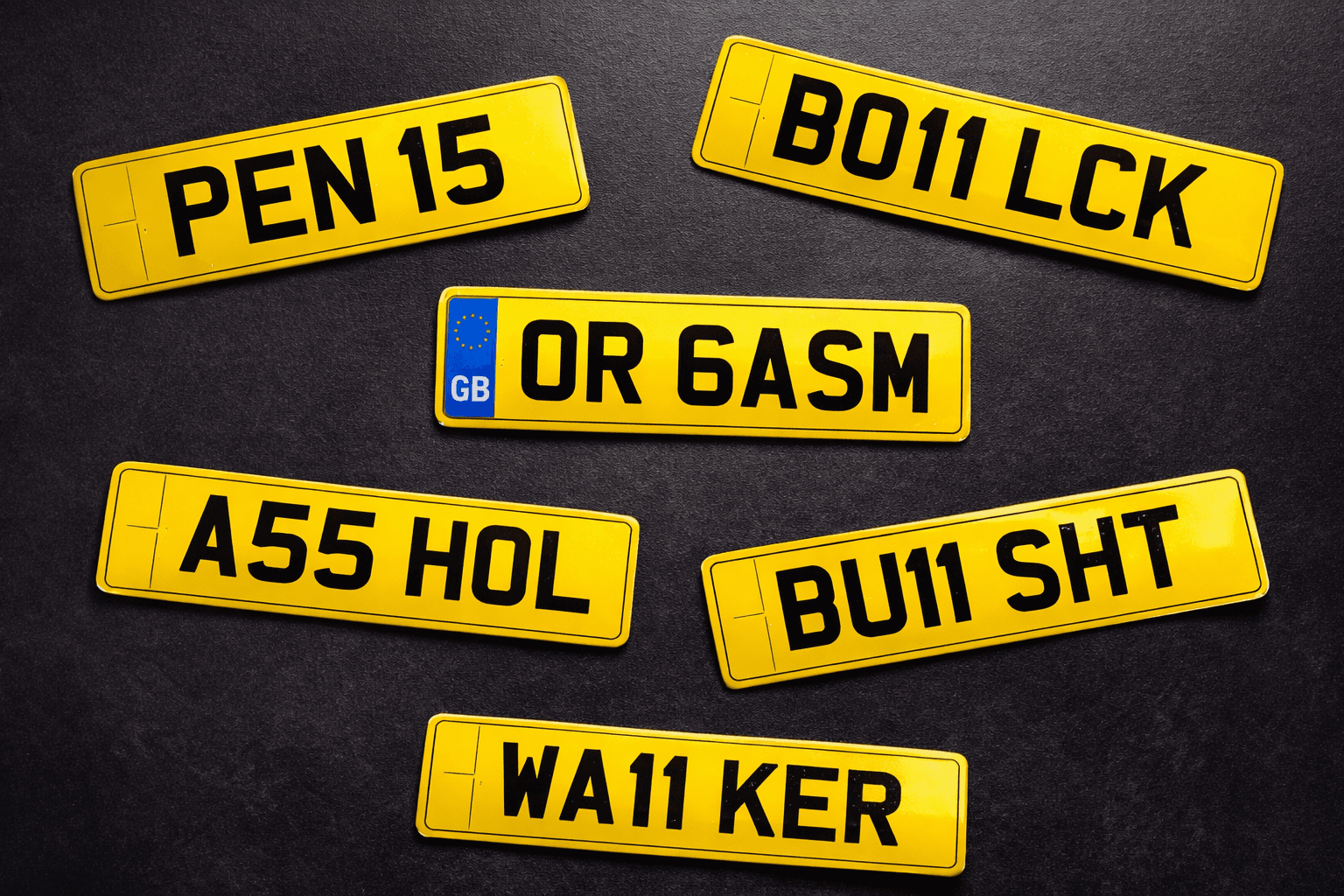
- 11 = H — Two ones side by side create a convincing H. "S11 LLY" reads as "SILLY" (sort of)
- 7 = T — Works at a stretch. "7 OM" can read as "TOM" if you're generous
- 8 = B — The number 8 has a similar shape to B. "8 ALL" could read as "BALL"
- 2 = R or Z — The weakest substitution. "2" looks a bit like "R" if you squint, or "Z" in certain fonts
- 6 = G — A mild stretch but used in some plates. "6 OLD" could be "GOLD"
Single-Word Plates That Actually Work
The best word plates are the ones that read effortlessly — you see them and your brain processes the word before you even notice the number substitution. These are the gold standard:
Plates using 4 as A are the most readable: B4 RRY (Barry), H4 RRY (Harry), L4 RRY (Larry), and M4 RRY (Marry) all work beautifully. The "55" combination makes a great double-S: BO55 (Boss), MO55 (Moss), and RO55 (Ross). And "11" as H gives us S11 VER (Silver... almost) and other creative readings.
Current Format Gems
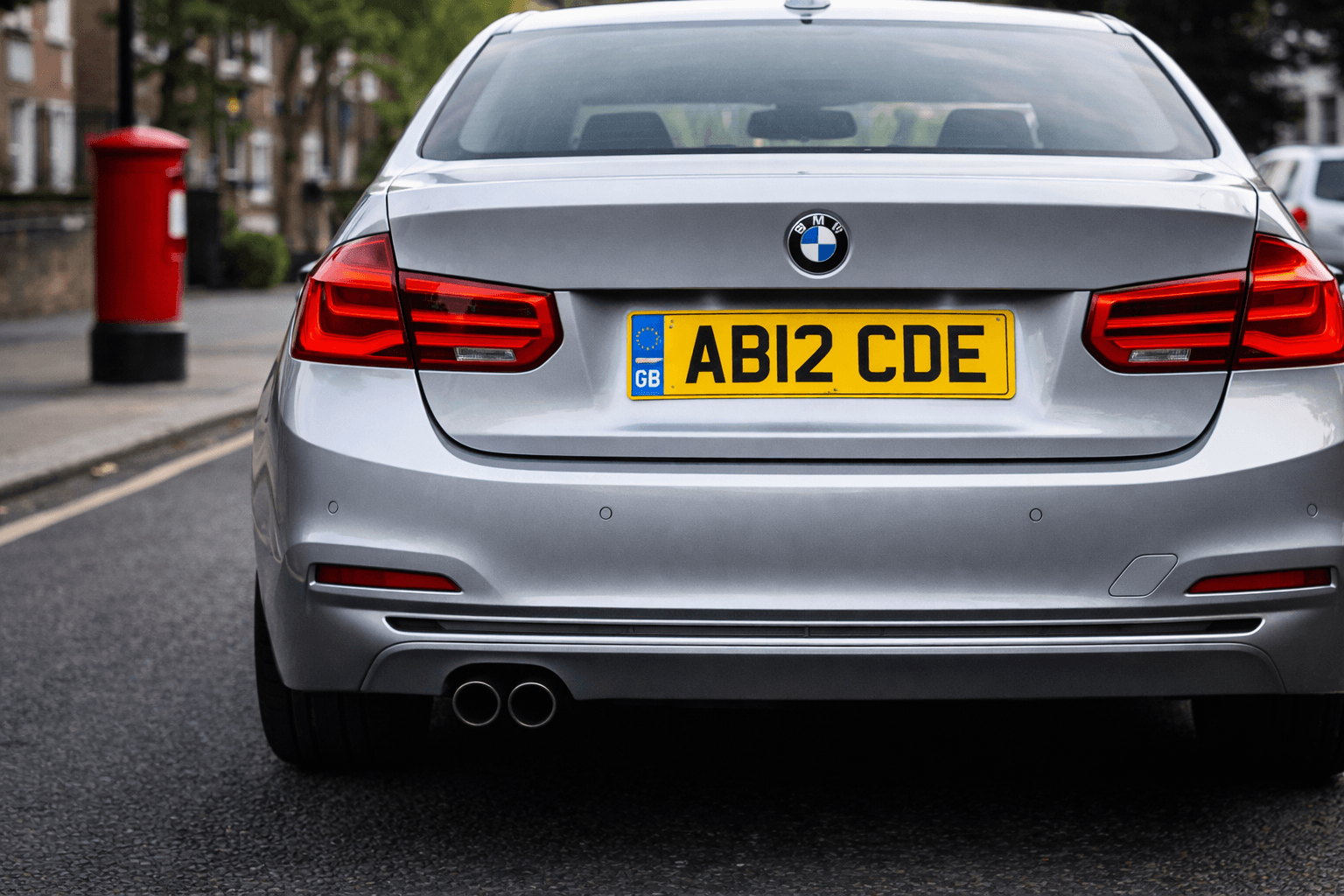
The current UK plate format (AB12 CDE) creates some wonderful accidental words. Because the first two positions are always letters, the last three are always letters, and the middle two are numbers, you get combinations like:
BA11 BOY (Ball Boy), GO14 WAY (Go Away), NO15 EUP (it's a stretch, but "Nose Up"), and BE67 INS (Begins). The age identifier in the middle limits what's possible, but creative buyers have found some absolute gems. Every new release in March and September brings a fresh batch of readable combinations.
Prefix and Suffix Format Tricks
The prefix format (A123 BCD) is the personalised plate buyer's best friend for word-making. The single letter at the start followed by up to three numbers and three letters at the end gives you enormous flexibility. This is where most affordable name plates live.
The suffix format (ABC 123D) works differently — three letters up front, numbers in the middle, and a year letter at the end. The three opening letters are gold: they can spell short words (BAD, TOP, ACE) or initials, while the numbers and final letter complete the plate. Suffix plates have a vintage look that many buyers prefer.
Advanced Techniques: Multi-Word and Phrase Plates
The real artistry comes when buyers create plates that read as phrases rather than single words. The space in the middle of a UK plate naturally creates a word break, so plates like "NO1 DEA" (No Idea), "MY51 TER" (My Sister), and "BO55 MAN" (Boss Man) use both halves to build a complete phrase.
Some buyers even create plates that tell a story or make a statement. "GO4 1T" (Go For It), "B16 MAC" (Big Mac), and "DR1 FTR" (Drifter) show what's possible when you combine substitutions with creative spacing. The constraint of the plate format — fixed positions for letters and numbers — becomes a creative challenge rather than a limitation.
Why Some Substitutions Work Better Than Others
The effectiveness of a number substitution depends on three things: the visual similarity of the number to the target letter, the context provided by surrounding characters, and the speed at which the plate is typically read.
On a stationary car, you have time to study a plate and decode the substitutions. At 70mph on the motorway, you get maybe two seconds. This is why the strongest substitutions (1=I, 0=O, 4=A, 5=S) work so much better than the weaker ones (2=R, 6=G, 8=B). Your brain processes the strong ones automatically; the weak ones require conscious effort.
The best personalised plates use no more than one or two substitutions per word. A plate with a single "4" standing in for an "A" reads naturally. A plate where every letter has been replaced with a number looks like a CAPTCHA test. Less is almost always more.
Ready to find your perfect plate?
Search over 73 million UK registrations with AI-powered search.
Search plates