Are Number Plates a Good Investment?
Can a Number Plate Really Be an Investment?
In a world of volatile stock markets, questionable crypto projects, and property prices that make your eyes water, personalised number plates have quietly become one of the more interesting alternative investments going. The numbers back it up: the personalised plate market in the UK is worth over £2 billion, and prices for desirable registrations have consistently outperformed inflation over the past 30 years.
But before you remortgage your house to buy a two-digit plate, let's be honest about what plate investing actually involves — the potential, the pitfalls, and whether it's genuinely a smart use of your money.
The Plates That Made People Serious Money
"25 O" sold at auction for £518,000 in 2014. To put that in perspective, you could have bought a four-bedroom house in most parts of England for that. "F 1" was purchased by Essex businessman Afzal Kahn for £440,000 back in 2008 and was later insured for over £14 million — making it the most valuable number plate in the UK. "S 1" sold for £404,000. "1 D" went for £352,000 in 2009.
Even more modest plates have seen extraordinary returns. Plates bought from DVLA auctions in the 1990s for a few hundred pounds have regularly resold for five or six figures. A plate bought for £250 in 1995 that's now worth £5,000 represents a return that makes most ISAs look pathetic.
What Makes a Plate Valuable?
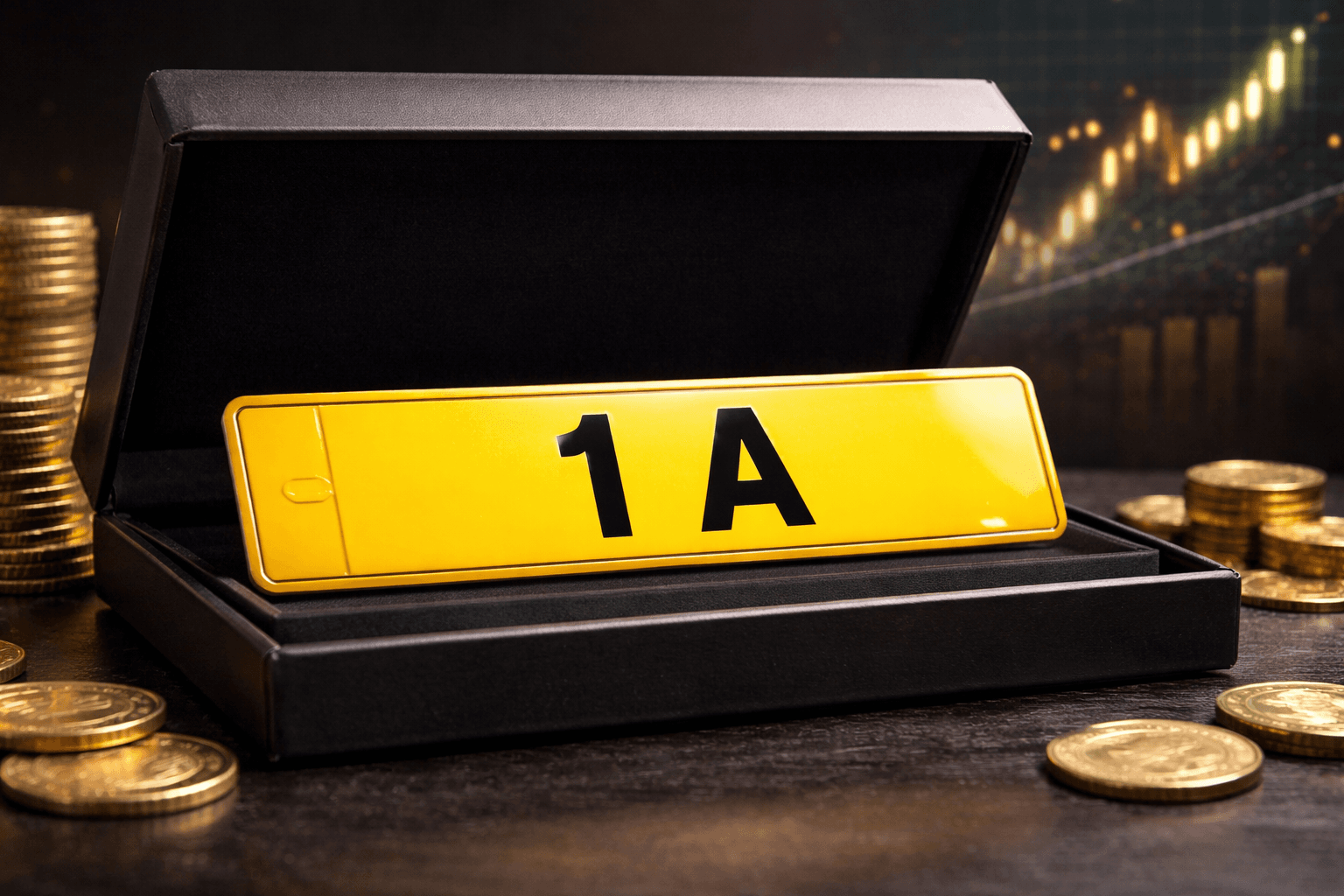
The single biggest factor in plate value is length. Shorter plates are rarer, look better on a car, and carry more prestige. A single letter and single number combination — like "1 A" or "S 1" — sits at the top of the tree. Two-character and three-character plates follow. By the time you get to seven characters, you're usually in mass-market territory.
After length, the most important factors are: recognisable names (anything that spells a common first name), words (real English words or near-approximations), initials (popular sets of initials like JB, AK, or DM), and numbers with cultural significance (1, 7, 100, 007). Plates that combine a popular name with a low number — like "1 DAV" or "JON 1" — sit in a sweet spot of desirability and relative scarcity.
Historical Returns and Market Trends
Research by plate dealers and auction houses suggests average annual returns of 10–15% on quality plates over the past two decades. That figure varies wildly depending on what you buy — some plates have returned 1,000%+ while others have barely moved. The key insight is that the very best plates have appreciated far faster than the average.
The market has shown remarkable resilience during recessions too. Plate prices dipped only slightly during the 2008 financial crisis and bounced back quickly. During COVID, the market actually strengthened as people spent less on holidays and more on their cars. Unlike classic cars, plates don't rust, don't need garaging, and cost virtually nothing to hold.
DVLA auction data tells an interesting story: the total revenue from plate sales has increased every single year for the past decade, suggesting growing demand in a market with strictly finite supply.
The Investment Case: Why Plates Could Keep Rising
The bull case for plates is straightforward. Supply is completely fixed — no new dateless plates will ever be created, and the pool of short plates, name plates, and word plates is finite. Meanwhile, demand continues to grow as personalised plates become more mainstream and the UK's car-owning population increases. The average price at DVLA auctions has risen steadily for years.
There's also a generational shift happening. Younger buyers who grew up seeing personalised plates as normal are entering the market, and social media has made flashy plates more desirable than ever. A good plate is essentially a wearable status symbol that goes everywhere with you.
- Fixed supply — no new dateless or short plates will ever be created
- Growing mainstream acceptance and demand
- Low holding costs — just £80 every 10 years to renew retention
- No capital gains tax on personalised plates (they're classified as wasting assets)
- Tangible asset with genuine utility — you can actually use it on your car
The Risks: Why Plates Aren't a Sure Thing
No honest assessment of plate investing would skip the risks. Liquidity is the big one — unlike shares, you can't sell a plate in seconds. Finding a buyer for a specific plate can take weeks, months, or even years. You're dealing in a market with no central exchange, limited price transparency, and transaction costs that can eat into returns.
Valuation is also subjective. A plate is worth exactly what someone will pay for it, and fashion changes. Plates based on trending slang or cultural moments can fall in value as quickly as they rise. A plate that spells a celebrity's name is only valuable while that celebrity is relevant.
There's also regulatory risk. If the government ever changed the rules around plate transfers, retention, or personalisation, it could impact the market significantly. And don't forget the £80 retention fee every 10 years — a trivial cost on a £50,000 plate, but a meaningful drag on a £500 one.
How to Invest Wisely in Plates
If you're going to treat plates as an investment, buy quality. The plates that have consistently appreciated are the ones with timeless appeal — short dateless plates, common first names, single-digit numbers. Avoid anything too trendy or niche. A plate that spells a classic name like "DAVE" or "SARAH" will always have a buyer. A plate referencing a 2024 meme might not.
Buy from reputable dealers or DVLA auctions, keep proper records, and be patient. The best returns in the plate market have gone to people who bought well and held for 10+ years. If you need your money back quickly, plates probably aren't for you.
- Focus on short plates (2-4 characters) for the strongest appreciation
- Common names outperform unusual ones
- Dateless plates carry a premium but offer the most flexibility
- Buy at the right price — overpaying wipes out future returns
- Think in decades, not months
Ready to find your perfect plate?
Search over 73 million UK registrations with AI-powered search.
Search plates