Number Plates the DVLA Won't Let You Have
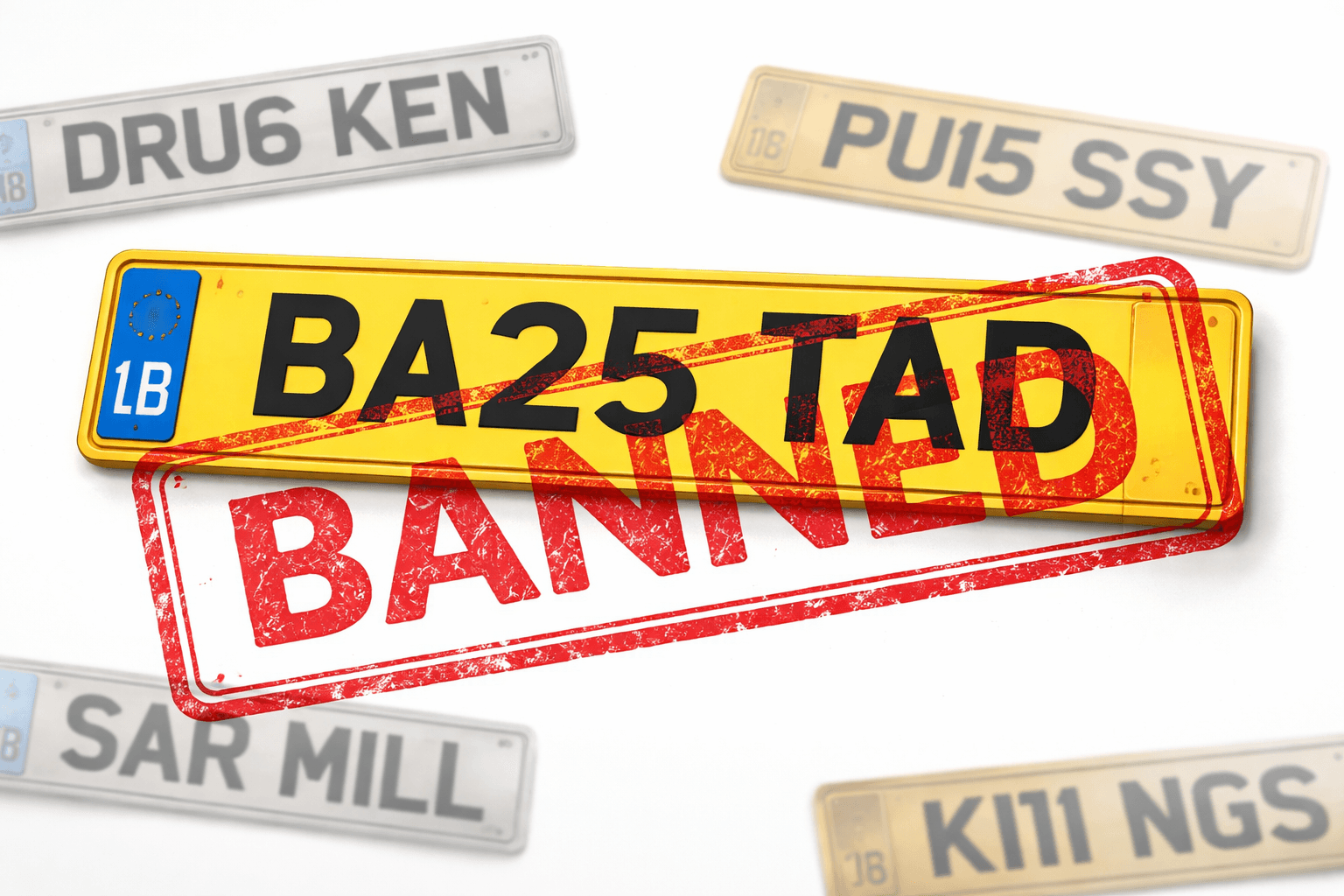
The DVLA's Naughty List: Plates Too Rude for the Road
Twice a year, a small committee of DVLA staff sits down with a very long list and a presumably very large cup of tea. Their job? To scan through every upcoming registration combination and pull out anything offensive, rude, politically sensitive, or just plain inappropriate. It's one of the most uniquely British civil service jobs imaginable — literally getting paid to spot swear words in number plates.
The results are both fascinating and hilarious. Every March and September, when new age identifiers are released, hundreds of combinations are quietly suppressed before they ever reach the public. The DVLA doesn't publish a full ban list, but over the years, through Freedom of Information requests and leaked documents, we've got a pretty good picture of what gets flagged.
How the Ban Process Works
The DVLA's internal committee reviews upcoming registration combinations before each release. They're looking for anything that could be read as offensive — swear words, racial slurs, sexual references, drug references, or politically sensitive terms. They also flag combinations that might be mistaken for emergency service plates or could cause public concern.
The committee uses a phonetic approach as well as a visual one. They read plates aloud, squint at them from a distance, and consider how they'd look at speed on a motorway. A plate that seems innocent when typed out might read very differently when displayed in the standard UK plate font at 70mph.
Interestingly, the DVLA has become more thorough over the years. In the early days of the current format (2001 onwards), quite a few rude combinations slipped through. The committee now apparently uses a longer checklist and consults more broadly on potentially offensive combinations.
The Usual Suspects: Permanently Banned Sequences
Some letter-number combinations are banned every single time they come up, regardless of the age identifier. Any sequence that could form well-known profanities is automatically suppressed. The DVLA has a standing ban list that includes obvious combinations of common four-letter words, racial slurs, and sexual terms.
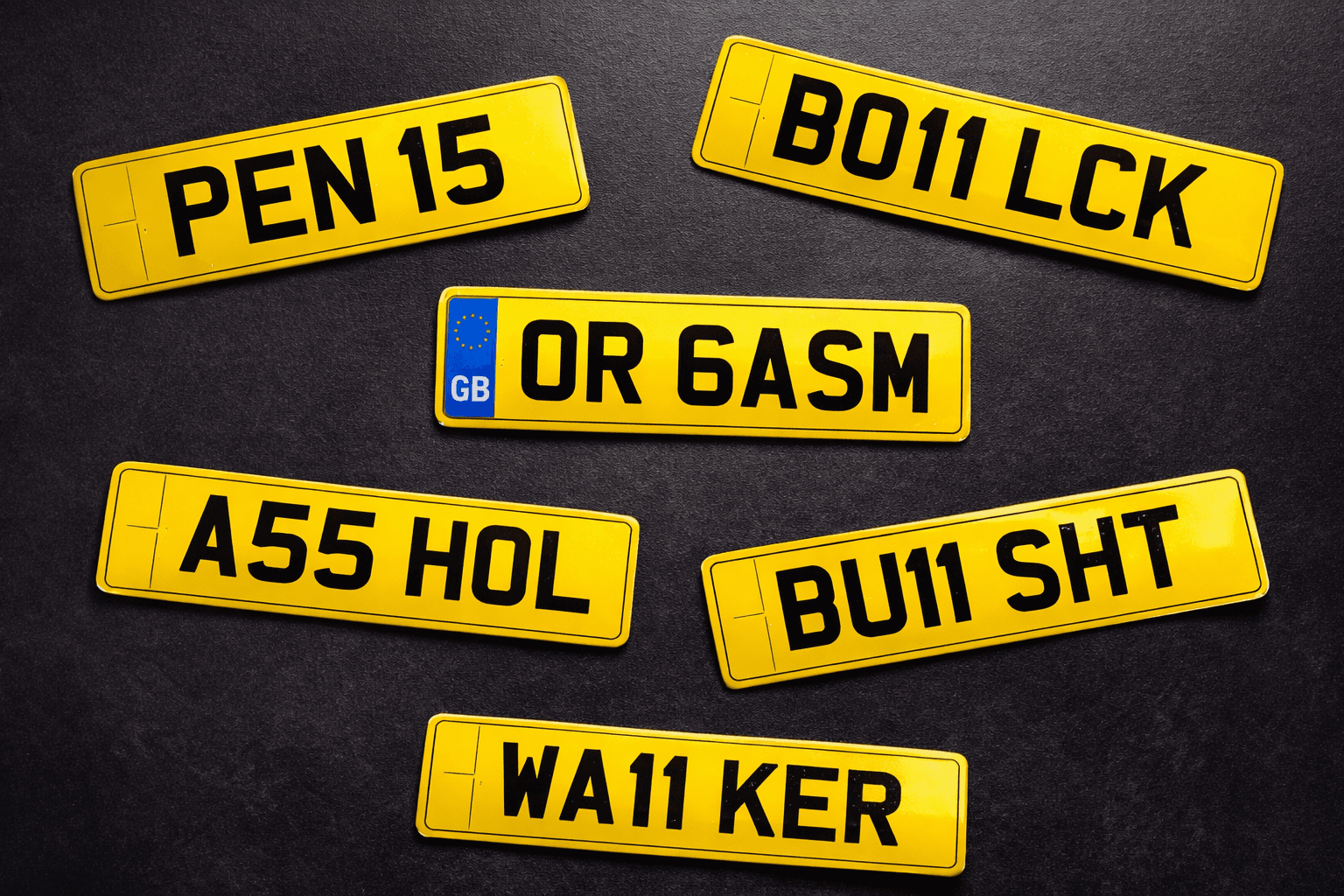
Without printing the actual words (this is a family blog), you can probably guess most of them. Any combination starting with the obvious four-letter-word sequences is pulled. Anything ending in letter combinations that, combined with typical age identifiers, would spell something you wouldn't say in front of your nan — that gets pulled too.
The BU, SH, AR, and AS prefixes are particularly problematic for the committee, as they generate a disproportionate number of rude combinations when combined with later characters. The poor residents of Burton, Shrewsbury, and Arbroath have more restricted plate options than they probably realise.
The Ones That Raised Eyebrows
Beyond the obvious profanities, the DVLA also bans plates with political or social sensitivity. Combinations that could reference terrorist organisations, hate groups, or political movements are removed. In recent years, combinations that could be read as COVID-related slurs were also pulled — the pandemic created a whole new category of potentially offensive plates.
Drug references get the chop too. Anything resembling common drug slang is removed, which means the DVLA committee presumably needs to stay remarkably up-to-date with street terminology. One imagines a very serious civil servant in Swansea studying Urban Dictionary with a highlighter.
Religious references are handled carefully. Plates that could be seen as blasphemous or disrespectful to any faith are typically suppressed, though some — like JE55 US — have made it through over the years.
The Ones That Got Away
Despite the committee's best efforts, cheeky plates escape into the wild every year. The problem is scale — each new release generates thousands of potential combinations, and no committee can catch every double entendre, obscure slang term, or creative reading.
Some of the greatest escapes include plates that are only rude if you read them in a specific accent, plates that become offensive when the spacing is mentally rearranged, and plates that combine innocent elements into something the committee didn't anticipate. We've covered many of these in our funniest plates article.
There's also the issue of plates that become rude after the fact. A plate issued innocently in 2005 might carry a completely different meaning in 2025 if the letter combination has since become slang for something offensive. The DVLA can't predict future linguistic developments, though one suspects they wish they could.
Can a Plate Be Banned After Issue?
Here's an interesting question: can the DVLA recall a plate that's already been issued? The answer is technically yes, though it's extremely rare. The DVLA retains the right to withdraw any registration that's deemed to cause offence, but in practice they almost never exercise this power for plates that have already been sold and assigned.
The more common scenario is that plates flagged by public complaints are quietly added to the suppression list for future releases, while existing owners are left undisturbed. It would be legally and practically difficult to force someone to give up a plate they'd legally purchased and used for years.
That said, if you're driving around with a plate that's genuinely offensive, don't be surprised if you attract attention from the police. While they can't confiscate your plate for being rude, they can certainly have a word — and you might find yourself on the receiving end of extra scrutiny.
Ready to find your perfect plate?
Search over 73 million UK registrations with AI-powered search.
Search plates