How to Transfer a Number Plate (2026 Guide)
Transferring a Number Plate: Everything You Need to Know
So you've bought a personalised plate, or you want to move one between vehicles, or you're selling a car but keeping the registration. Whatever your situation, you're going to need to navigate the DVLA's transfer system. The good news: it's not actually that complicated. The bad news: there's paperwork. This guide will walk you through every step.
The Two Types of Transfer
There are fundamentally two things you might want to do with a plate. The first is retention — taking the plate off a vehicle and holding it on a certificate (a V778), ready to assign to another vehicle later. The second is a direct transfer — moving the plate from one vehicle to another in a single transaction. The DVLA uses different forms for each, but the process is broadly similar.
Retention uses form V317 and costs £80. You'll receive a V778 retention certificate, which is valid for 10 years. Direct transfer — putting a plate directly onto a new vehicle without any holding period — also uses the V317 form and costs £80. The key difference is whether you assign the plate immediately or hold it.
What You'll Need Before You Start
Before you do anything, make sure you have the essentials in order. The vehicle the plate is coming off (or going onto) must meet certain requirements, and you'll need specific documents to hand.
- The V5C (logbook) for the vehicle involved — you must be the registered keeper or have the registered keeper's consent
- A valid MOT on the vehicle (if it's over 3 years old)
- The vehicle must be taxed or have a valid SORN
- The vehicle must be available for inspection if the DVLA requests it
- Payment of £80 (online) for the transfer or retention fee
- If applying by post, you'll also need a completed V317 form
The Online Process (Recommended)
The easiest way to handle a plate transfer is online through the DVLA's own website at gov.uk. The process takes about 10–15 minutes if you have everything ready. You'll need the V5C reference number, the plate you want to transfer, and a debit or credit card for the £80 fee.
For retention (removing a plate and holding it), you'll go through the "keep a registration number" service. You'll enter the vehicle's details, confirm you want to remove the plate, pay the fee, and receive a digital V778 retention certificate. The vehicle will be assigned a new age-appropriate registration automatically.
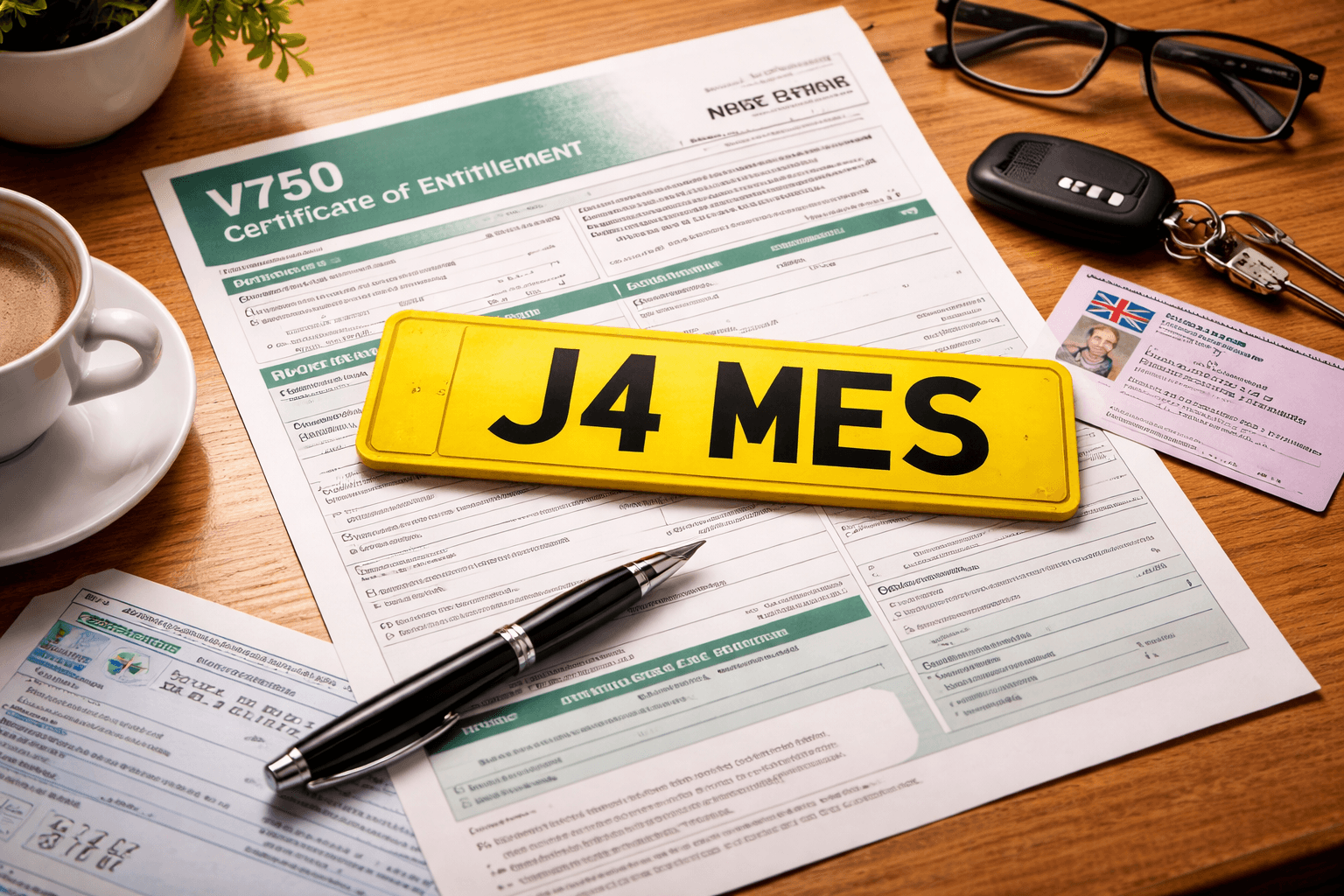
For a direct transfer (putting a plate onto a vehicle), you'll use the "assign a registration number" service. You'll need either a V778 retention document reference or a V750 certificate of entitlement. Enter the details, confirm, and the plate is assigned to the new vehicle. You'll need to order new physical plates from a registered plate maker.
The Postal Process
If you prefer paper, you can apply by post using form V317, available from Post Offices or downloadable from gov.uk. Fill in the form, include the V5C (or relevant section), a cheque for £80, and post it to DVLA, Swansea, SA99 1DS.
The postal route typically takes 2–4 weeks to process, compared to minutes for the online service. You'll receive your updated V5C and retention certificate (if applicable) by post. Honestly, unless you have a specific reason to go postal, the online route is faster and easier in every way.
Transferring a Plate You've Just Bought
If you've purchased a plate from a dealer like PersonalReg, the transfer process is slightly different. The dealer will typically handle most of the paperwork for you. You'll receive either a V750 certificate of entitlement (if bought from DVLA auction or stock) or a V778 retention certificate (if the plate was previously on another vehicle).
To assign the plate to your vehicle, you use the "assign a registration number" service on the DVLA website. Enter your V750 or V778 document reference, your vehicle registration, and the V5C reference number. Pay the £80 transfer fee and you're done. Remember: the transfer fee is separate from the purchase price — it's the DVLA's cut for updating their records.
Common Gotchas and Things to Watch For
There are a few traps that catch people out. First, you cannot put a plate on a vehicle that would make it appear newer than it is. A "74" plate (September 2024) cannot go on a car registered in 2020. Dateless plates and NI plates avoid this issue entirely, as they carry no age identifier.
Second, both vehicles involved (the one losing the plate and the one gaining it) must meet DVLA requirements at the time of transfer. If the car you're taking the plate off has no MOT, the transfer will be refused. Third, V778 retention certificates expire after 10 years — if you don't assign the plate before then, you lose it. You can renew for another £80 before expiry.
Finally, don't forget to actually buy new physical plates once the transfer is done. The DVLA handles the database side, but you need to visit a registered number plate supplier with your new V5C to get the actual plates made up. Any registered plate maker will do this for around £20–40.
Timeline Summary
Here's a rough timeline for the whole process, from purchase to plates on your car:
- Buying the plate: instant (online) to a few days (auction)
- Receiving documentation: 1–5 working days from dealer
- Online DVLA assignment: usually processed same day
- Postal DVLA assignment: 2–4 weeks
- Receiving updated V5C: 2–4 weeks after assignment
- Getting physical plates made: same day from any registered plate maker
- Total time from purchase to plates on your car: typically 1–2 weeks
Ready to find your perfect plate?
Search over 73 million UK registrations with AI-powered search.
Search plates